Best Pilates Balance Boards in October 2026
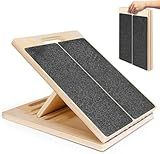
Portable Wooden Slant Board for Calf Stretching Squats Calf Stretcher Pilates Physical Therapy Equipment Adjustable Incline Board for Knees Ankle Heel Feet Leg
-
PORTABLE & LIGHTWEIGHT: STRETCH ANYWHERE WITH JUST 4.5 LBS!
-
ALL AGES & FITNESS LEVELS: PERFECT FOR EVERYONE-HOME, OFFICE, GYM!
-
ADJUSTABLE POSITIONS: 4 ANGLES FOR OPTIMAL STRETCHING AND SQUATS!


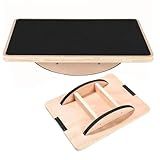
Balance Board Wooden Wobble Board for Adults Anti-Slip Board for Physical Therapy & Core Strength, Ideal Balance Board for Standing Desk with Ankle Support
-
HIGH-QUALITY, DURABLE DESIGN SUPPORTS UP TO 350 LBS FOR ALL USERS.
-
VERSATILE USE FOR THERAPY, TRAINING, AND DESK EXERCISE FOR EVERYONE.
-
READY-TO-USE, NO ASSEMBLY REQUIRED, ENSURING CONVENIENCE AND EASE.
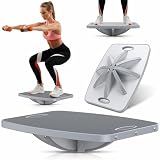
Professional Wooden 360° Rotating Balance Board, Anti-Slip wobble board, 500 lbs Capacity. Perfect for under-desk standing, physical therapy, rehab, core & stability training, and fun for all ages.
-
BUILT TO LAST: DURABLE WOOD AND WATERPROOF DESIGN FOR LONG-TERM USE.
-
ANTI-SLIP SURFACE ENSURES SAFETY DURING VARIOUS WORKOUTS AND EXERCISES.
-
MULTI-FUNCTIONAL TOOL FOR REHAB, FITNESS, AND IMPROVED POSTURE SUPPORT.
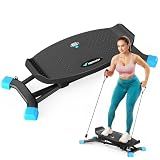
MERACH Balance Board for Adults, Rocking Stepper with Resistance Bands
- BURN FAT 2X FASTER WITH RHYTHMIC GLIDING CARDIO WORKOUTS!
- ENJOY LOW-IMPACT, FUN CARDIO WHILE PROTECTING YOUR JOINTS!
- DISCREET OPERATION UNDER 25DB FOR QUIET WORKOUTS ANYWHERE!
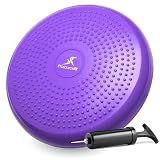
ProsourceFit Core Balance Disc Trainer, 14" Diameter with Pump for Fitness, Balance Training, or Seating; Wobble Board for Core Stability; Flexible Floor Cushions for Kids, Purple
- ENHANCE CORE STRENGTH AND BALANCE WITH VERSATILE WORKOUT OPTIONS.
- DUAL-TEXTURED DESIGN ENSURES GRIP AND COMFORT DURING EXERCISES.
- LIGHTWEIGHT AND PORTABLE FOR FITNESS ANYWHERE, ANYTIME!
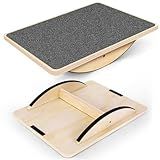
Balance Board Professional Wobble Board for Adults Anti-Slip 350LBS Balance Boards for Physical Therapy Standing Desk Core Strength Wooden Balance Board Rocker Board
-
BOOSTS BALANCE FOR ALL AGES-PERFECT FOR BEGINNERS AND SENIORS!
-
VERSATILE FOR WORKOUTS AND REHAB-SQUATS, PUSH-UPS, AND MORE!
-
DURABLE, ANTI-SLIP DESIGN SUPPORTS UP TO 350 LBS FOR SAFETY!
GIBBON SlackBoard - GiBoard Balance Board Kids & Adults - Slackline Balance Trainer - Slack Board Core Workout Equipment Home Gym Training - Standing Desk Exercise - Yoga, Agility, Pilates & More
-
COMPACT & STYLISH: PERFECT FOR ALL AGES, HOME, OR OFFICE WORKOUTS!
-
BOOST CORE STRENGTH: ENHANCES POSTURE & MOBILITY FOR EVERYDAY PERFORMANCE.
-
SAFE DESIGN: IDEAL FOR ALL SKILL LEVELS WITH NO METAL OR MOVING PARTS!
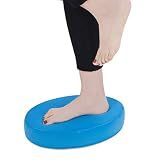
Stability Trainer Pad - Foam Balance Exercise Pad Cushion for Therapy, Yoga, Dancing Balance Training, Pilates,and Fitness (Blue)
- ENHANCES ANKLE STABILITY, RELIEVING KNEE AND ELBOW PAIN EFFECTIVELY.
- NON-SLIP, WATER-RESISTANT, AND EASY TO CLEAN FOR HASSLE-FREE USE.
- PERFECT FOR YOGA, FITNESS, AND REHAB – PORTABLE AND VERSATILE DESIGN.
Pilates Balance Board Review: Worth It in 2026? Absolutely-if you want a compact way to train core strength, coordination, ankle stability, and body awareness without turning your living room into a full studio.
I’ve spent enough time on balance boards to know they’re not magic. Some feel like gimmicks after a week. Others quietly become the piece of equipment you keep coming back to because they make even basic Pilates movements more challenging, more engaging, and frankly, more fun.
That’s what matters in 2026. You’re not just asking whether a Pilates balance board works. You’re asking whether it deserves floor space, money, and a place in your routine. Let’s break down what it does well, where it falls short, and who should actually buy one.
Pilates Balance Board Review: Worth It in 2026? Here’s the Short Answer
If your goal is better balance, deeper core activation, improved proprioception, and low-impact functional training, a Pilates balance board can be worth it.
If your goal is to replace a full reformer-style workout, build serious muscle fast, or get lots of exercise variety from one tool alone, it may feel limited.
The sweet spot is this: a balance board works best for people who want portable Pilates equipment, need home workout gear for small spaces, or want to add instability training to mat Pilates. That’s especially true if you’re bored with standard crunches, planks, and standing balance drills.
What a Pilates Balance Board Actually Does
A Pilates balance board adds an unstable surface under your feet, hands, knees, or seat. That instability forces your body to recruit more deep core muscles, especially the stabilizers around your spine, hips, knees, and ankles.
In practice, that means simple movements get harder fast.
A regular squat becomes a test of alignment. A plank becomes a serious anti-rotation challenge. Even standing still can reveal left-right imbalances you never noticed on flat ground.
That’s why I don’t see it as a “trendy Pilates gadget.” I see it as a movement feedback tool. It tells you, immediately, where your balance, posture, and control break down.
Pilates Balance Board Review: Worth It in 2026? Who Gets the Most Value
Not everyone needs one. But some people benefit a lot.
You’ll likely get strong value from a Pilates balance board if you are:
- A home exerciser who wants more challenge without bulky equipment
- A beginner in Pilates who needs better body awareness and alignment
- An intermediate user looking to level up mat work
- Someone recovering baseline stability after inactivity, with medical clearance
- An athlete or active adult who wants better joint stability and coordination
- A small-space dweller comparing it with other space-saving pilates equipment
It’s less ideal if you dislike balance work, have significant mobility limitations, or want a machine-led workout that guides every movement for you.
Key Features to Look for Before You Buy
Not all balance boards feel the same under your body. Small design differences change the workout a lot.
Here’s what to look for.
1. Surface Grip
You want a textured, non-slip top that feels secure with bare feet or grippy socks.
Too slick, and you’ll spend the entire session bracing out of fear instead of moving with control.
2. Stability Level
Some boards are beginner-friendly with a gentler range of motion. Others are much more reactive.
If you’re new to instability training, start with a moderate wobble, not the most advanced option available.
3. Build Quality
A board should feel solid, quiet, and stable under load. Cheap construction often shows up as creaking, uneven rocking, or a surface that wears down quickly.
That matters more than flashy add-ons.
4. Size and Foot Placement Room
If the platform is too cramped, you’ll struggle with squats, lunges, and stance adjustments.
A slightly roomier board is usually more forgiving for Pilates-inspired movement patterns.
5. Exercise Versatility
The best boards support more than standing drills. Look for designs that allow:
- Planks
- Push-up variations
- Seated core work
- Glute bridges
- Split-stance balance training
- Mobility and rehab-style exercises
6. Floor Compatibility
Hardwood, tile, and laminate surfaces all behave differently. A board that slides is a no-go.
Check whether it works well on your floor type, or whether you’ll need an exercise mat underneath.
7. Ease of Storage
One big reason people consider a Pilates balance board in 2026 is convenience.
If it tucks under a couch or into a closet, you’re much more likely to use it consistently.
The Real Benefits: Why a Pilates Balance Board Can Be So Effective
The biggest benefit isn’t just “working your core.” That phrase is overused.
The real benefit is that a balance board teaches your body to coordinate multiple systems at once: stability, posture, muscle timing, and joint control.
Better Core Engagement Without Endless Reps
On a stable floor, it’s easy to fake core work with momentum or compensation.
On a board, you can’t hide. Your trunk has to organize itself more efficiently, which often makes short sessions feel surprisingly effective.
Improved Balance and Proprioception
This is the standout benefit.
Your proprioception-your sense of where your body is in space-improves when you train on unstable surfaces. That can translate into better movement quality during daily life, sports, and other forms of fitness.
Stronger Ankles, Feet, and Hips
A lot of people buy a balance board for abs and end up noticing changes lower down the chain.
Your feet grip differently. Your ankles react faster. Your hips stabilize better. Those are subtle gains, but they matter.
More Challenge in Less Time
If you’re time-crunched, a balance board increases the demand of simple exercises fast.
A 15-minute session can feel far more focused than a longer workout full of repetitive floor exercises.
Gentle, Low-Impact Training Option
For many users, this is a smart alternative to high-impact cardio or jumping-based routines.
That also makes it a useful complement to other Pilates tools, especially if you’re comparing it with the best arc barrels for pilates for mobility, extension work, and spinal support.
Where It Falls Short
Let’s be honest: the board isn’t perfect.
The first limitation is progression. Once your nervous system adapts, you may need more advanced drills, slower tempos, or longer holds to keep improving.
The second is exercise variety. Yes, you can do a lot with a balance board. But no, it won’t fully replace resistance training, reformer sessions, or a complete Pilates setup.
Third, some people expect instant calorie burn or dramatic body transformation. That’s unrealistic. It works best as part of a broader routine that includes strength, mobility, and recovery.
If fat loss is one of your goals, it’s smarter to pair balance board training with sustainable habits and other modalities, not rely on one tool alone. For related reading, some people also explore weight loss with pilates ball workouts as a lower-impact addition.
Pilates Balance Board Review: Worth It in 2026? My Hands-On Verdict
After using balance boards in short home sessions, warm-ups, and Pilates accessory work, my take is simple: they’re worth it for the right user, not for every user.
What I like most is the feedback. The board tells you immediately if you’re collapsing into one hip, gripping your toes, arching your back, or rushing through movement.
That kind of instant correction is valuable.
What I like less is that many people buy one without a plan. They stand on it for a few minutes, wobble around, get frustrated, and let it collect dust. The board is only as useful as the exercises and progressions you actually use.
Pro Tips: How to Use a Pilates Balance Board Without Wasting Your Money
A few smart adjustments make a huge difference.
Start with shoes off, but not with ego on
Barefoot training usually gives you better sensory feedback.
But don’t jump into advanced one-leg drills on day one. Start with two-foot stance work, mini squats, and supported holds.
Use it for short “movement snacks”
You don’t need 45 minutes.
Try 5 to 10 minutes before a Pilates mat session, strength workout, or even during a work break. That’s often enough to improve activation and consistency.
Pair instability with control, not chaos
The goal isn’t to wobble as wildly as possible.
The goal is to move slowly, breathe well, and maintain alignment while the surface challenges you.
Pro tip: Film yourself from the front and side during your first few sessions. You’ll spot asymmetries and posture habits much faster than you feel them.
Don’t use it as a rehab device without guidance
Balance boards can support joint stability and neuromuscular control, but they’re not one-size-fits-all.
If you’re dealing with pain, dizziness, or post-injury limitations, get advice from a qualified professional first.
Keep it clean and maintained
Grip surfaces wear down, and dust can make boards slippery.
Basic pilates equipment care habits-like wiping surfaces, checking traction, and storing gear dry-help it stay safe and usable.
Common Mistakes Beginners Make
Most bad experiences come down to setup and expectations.
Avoid these mistakes:
- Starting too advanced
- Locking your knees
- Holding your breath
- Looking down the whole time
- Using speed instead of control
- Treating it like a toy instead of training equipment
💡 Did you know: Looking at a fixed point at eye level can instantly improve balance performance. It’s a simple trick, but it works.
How to Get Started With a Pilates Balance Board
If you’re curious but not fully committed, start small and structured.
Step 1: Define your goal
Ask yourself what you want most:
- Better core stability
- Improved balance
- Stronger ankles and hips
- More challenge in mat Pilates
- Compact home fitness equipment
Your answer helps you decide whether this tool fits your routine.
Step 2: Build a simple 10-minute routine
Start with:
- Two-foot standing hold – 30 to 45 seconds
- Mini squats – 8 to 10 reps
- Weight shifts side to side – 30 seconds
- Plank with hands on board – 20 to 30 seconds
- Glute bridge with feet on board – 8 to 10 reps
- Seated balance posture hold – 30 seconds
Repeat once or twice.
Step 3: Train 2 to 4 times per week
Consistency beats intensity here.
Short, repeatable sessions help you build balance and coordination without overwhelming your nervous system.
Step 4: Progress gradually
Once the basics feel steady, add:
- Slower reps
- Longer holds
- Single-leg stance near a wall
- Controlled rotation work
- Integration into Pilates flows
Step 5: Match the tool to your household
If you share equipment with family, think about who’ll use it.
For households with younger users, review guidance around safe pilates equipment for children and always supervise balance-based movement.
Who Should Buy One in 2026?
Buy a Pilates balance board if you want a compact, low-impact, stability-focused piece of equipment that makes basic exercises more effective.
It’s especially worth it if you:
- Prefer home workouts
- Need something easy to store
- Enjoy mindful movement
- Want to improve balance and body control
- Already do Pilates and want more challenge
Skip it if you:
- Want a full-body strength solution by itself
- Hate balance training
- Need highly guided machine-based workouts
- Expect fast aesthetic results from one tool alone
For most people, the smartest move is to view it as a supplement, not the whole system.
If that sounds like what you need, go for a well-built board, start with a simple plan, and use it consistently for the next 30 days. You’ll know quickly whether it earns a permanent spot in your routine.
Frequently Asked Questions
is a pilates balance board good for beginners?
Yes, a Pilates balance board can be great for beginners if the instability level is manageable and you start with basic movements. The key is to focus on controlled holds, posture, and support nearby rather than jumping into advanced drills.
does a pilates balance board help with belly fat?
Not directly on its own. A Pilates balance board can improve core engagement and increase workout intensity, but fat loss depends on your overall activity, nutrition, sleep, and consistency.
what exercises can you do on a pilates balance board at home?
You can do standing holds, mini squats, planks, glute bridges, weight shifts, lunges, and seated core balance drills. It works best for low-impact stability training and for adding challenge to mat-based Pilates exercises.
is a pilates balance board worth buying for small apartments?
Yes, for many people it is. One of the biggest advantages is that it offers meaningful core and balance training while taking up far less room than larger home fitness equipment.
can older adults use a pilates balance board safely?
Many older adults can use one safely, but it depends on balance ability, strength, and medical history. Starting near a wall or sturdy support-and getting professional guidance if needed-is the safest approach.