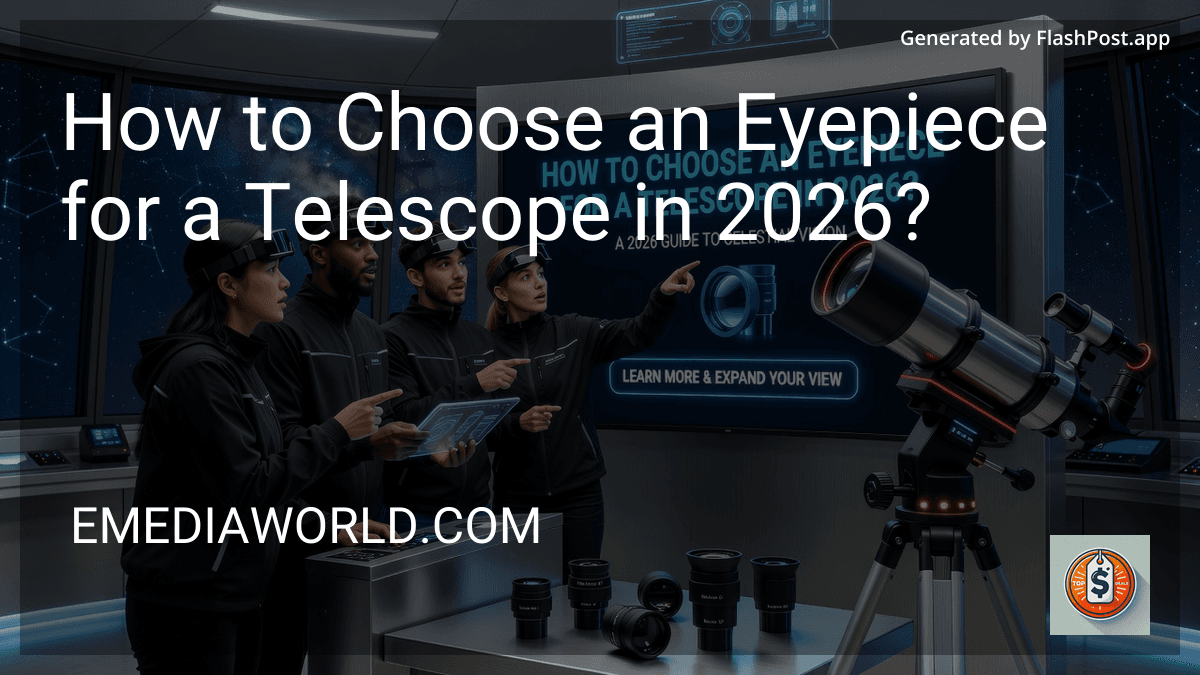
Best Telescope Eyepieces for Beginners and Enthusiasts in October 2026
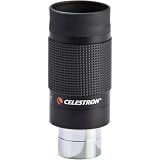
Celestron 8-24mm Zoom Telescope Eyepiece with Fully Multi-Coated Optics | Variable 8-24mm Magnification, One Eyepiece Replaces Multiple Focal Lengths, Smooth Twist-Zoom Operation, 1.25" Barrel
- INSTANT ZOOM FROM 8MM TO 24MM-FOCUS ON WHAT MATTERS MOST!
- ONE EYEPIECE REPLACES MANY-SAVE MONEY AND SIMPLIFY STARGAZING!
- COMPATIBLE WITH ALL 1.25 TELESCOPES-VERSATILITY AT ITS BEST!


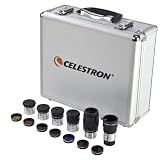
Celestron Eyepiece, Barlow & Filter Telescope Accessory Kit – 1.25" Barrel | 14 Essential Telescope Accessories, 5 Plossl Eyepieces, 2x Barlow, 7 Colored & Moon Filters, Includes Premium Metal Case
-
VERSATILE KIT: 5 PLÖSSL EYEPIECES & 2X BARLOW FOR ENHANCED VIEWING.
-
COLOR FILTERS INCLUDED: EXPLORE PLANETS WITH SPECIALIZED COLORED FILTERS!
-
DURABLE CASE: FOAM-LINED, HARD-SIDED CASE KEEPS YOUR GEAR SAFE & ORGANIZED.
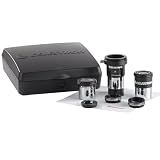
Celestron AstroMaster Telescope Accessory Kit – 1.25" Eyepieces & Filters | Essential Accessories for New Astronomers, 2 Eyepieces, 2x Barlow and Filters, Expand Your Capabilities, Easy to Use
-
ENHANCE YOUR VIEWING: 8-PIECE KIT FOR IMPROVED TELESCOPE PERFORMANCE!
-
CAPTURE STUNNING IMAGES: EASILY ATTACH YOUR DSLR FOR ASTROPHOTOGRAPHY.
-
GUARANTEED QUALITY: 2-YEAR WARRANTY AND EXPERT SUPPORT INCLUDED!
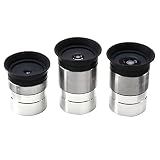
Starboosa 1.25-Inch Telescope Eyepiece Set, 4mm 10mm 20mm | Multi-focal eyepiece kit; fully multi-coated optics
- EXPERIENCE STUNNING CLARITY WITH OUR UPGRADED MULTI-COATED EYEPIECES!
- VERSATILE 4MM, 10MM, AND 20MM OPTIONS FOR EVERY ASTRONOMICAL VIEW.
- COMFORT-FOCUSED DESIGN WITH SOFT EYECUPS FOR PROLONGED OBSERVING SESSIONS.
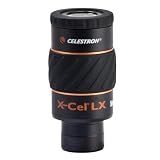
Celestron X-Cel LX 5mm Eyepiece for Telescopes - High-Power Planet Views | High-Power Planetary Views, 60° Wide Field of View, Long Eye Relief, Twist-Up Eyecup, Fully Multi-Coated Optics
- ULTIMATE PLANETARY CLARITY WITH 60° FOV AND MULTI-COATED LENS.
- COMFORTABLE POP-UP EYEGUARDS ENHANCE VIEWING CONTRAST EFFORTLESSLY.
- TRUST CELESTRON’S 2-YEAR WARRANTY AND EXPERT SUPPORT FOR CONFIDENCE.
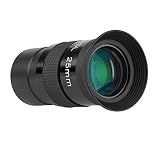
SVBONY 25mm Telescope Eyepiece, 40 Degree 1.25 inch Plossl Eyepiece
-
VERSATILE 1.25 FIT: COMPATIBLE WITH ANY 1.25 TELESCOPE OR ACCESSORY.
-
WIDE 40-DEGREE FIELD OF VIEW: EFFORTLESSLY CENTER BRIGHT NEBULAE AND OBJECTS.
-
FMC LENS FOR CLARITY: CLEAR, BRIGHT IMAGES EVEN IN LOW-LIGHT CONDITIONS.
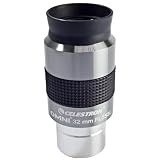
Celestron Omni 1.25" 32mm Telescope Eyepiece for Expansive Star-Field Views | Wide Deep-Sky Views, 4-Element Plössl Design, Fully Multi-Coated Optics, Sharp High-Contrast Views, Blackened Lens Edges
- HIGH-QUALITY 4-ELEMENT PLOSSL DESIGN AT AN UNBEATABLE PRICE!
- COMFORTABLE RUBBER EYECUPS FOR IMPROVED CONTRAST-EYE GLASS FRIENDLY!
- BACKED BY A 2-YEAR WARRANTY AND EXPERT SUPPORT FROM CELESTRON!
How to Choose an Eyepiece for a Telescope in 2026? starts with one number most beginners underestimate: a 10 mm eyepiece can show 4x more magnification than a 40 mm eyepiece on the same scope, yet often delivers a dimmer, shakier, less satisfying view if your telescope and sky conditions can’t support it.
I’ve seen this play out at star parties for years. Someone buys a high-power eyepiece lens for telescope use because “more zoom” sounds better, then spends 20 minutes trying to center Jupiter in a tiny field of view while a simple 25 mm would have shown more detail, more comfortably, and with far less frustration.
That’s the real goal here: not buying the most powerful eyepiece of telescope accessories, but buying the right one. You’ll learn how magnification actually works, which focal lengths make sense for your telescope, what to buy at different budgets, and the red flags that separate a useful telescope eyepiece lens from one that just looks good on a product page.
How we select products: Our team reviews telescope accessories by comparing optical specs, buyer feedback patterns, field usability, pricing tiers, and durability signals. We prioritize eyepieces with solid optical coatings, common barrel compatibility, reliable edge performance, and consistently positive owner reports rather than inflated magnification claims.
How to Choose an Eyepiece for a Telescope in 2026? Start With Your Telescope’s Focal Length
The single most important number is your telescope’s focal length in millimeters. To calculate magnification, divide the telescope focal length by the eyepiece focal length.
For example:
- 1200 mm telescope + 25 mm eyepiece = 48x
- 1200 mm telescope + 10 mm eyepiece = 120x
- 1200 mm telescope + 5 mm eyepiece = 240x
That one formula explains almost everything about choosing an eyepiece for telescope use.
If you remember only one rule, make it this: the best eyepiece for a telescope is the one that matches your telescope’s focal length, your target, and your seeing conditions-not the one with the shortest number on the box.
What is a good magnification range for an eyepiece for a telescope?
Most nights, useful observing happens between 40x and 200x. Under average suburban skies, many amateur telescopes perform best around 80x to 150x for planets and 25x to 75x for star clusters, the Moon, and sweeping the Milky Way.
A practical starter trio for many scopes looks like this:
- Low power: 24–32 mm
- Medium power: 12–18 mm
- High power: 6–10 mm
That spread covers most real observing better than chasing extreme magnification.
What does the eyepiece in telescope performance actually change?
The eyepiece in telescope viewing controls magnification, field of view, eye relief, and viewing comfort. It does not improve your telescope’s optical quality, but it can absolutely make a good telescope easier-or harder-to use.
Here’s what changes most:
-
Magnification
Lower focal length = higher power. A 10 mm telescope eyepiece 1.25 format gives more power than a 25 mm in the same scope. -
True field of view
Wider apparent field eyepieces let you see more sky at once. That matters a lot for manual Dobsonian users tracking objects by hand. -
Eye relief
If you wear glasses, eye relief under about 10 mm often feels cramped. Around 15–20 mm is much more comfortable. -
Image brightness
Low-power eyepieces produce a larger exit pupil, which usually gives brighter views for nebulae and large clusters. -
Ease of tracking
High-power eyepieces magnify the Earth’s rotation too. Planets drift across the field faster, especially in undriven mounts.
If you’re also learning manual tracking, https://freelanceshack.com offers useful background on keeping targets centered once magnification rises.
How to Choose an Eyepiece for a Telescope in 2026 Based on What You Observe Most
Not every target wants the same eyepiece. That’s where many buying guides go wrong.
Best eyepiece telescope choices for the Moon and planets
For lunar and planetary work, your best range is usually 120x to 200x on nights of average seeing. That often translates to a 6 mm to 10 mm eyepiece lens telescope setup on common mid-focal-length instruments.
Best pick for this section: a comfortable high-power eyepiece with at least 60° apparent field and usable eye relief. You’ll spend less time nudging and more time observing subtle detail on Jupiter and Saturn.
Best telescope eyepiece lenses for galaxies and nebulae
Deep-sky observing usually rewards lower power and wider fields. A 24 mm to 32 mm eyepiece of a telescope often shows more of the object and keeps the image brighter.
Best pick for this section: a low-power wide-field eyepiece. For large nebulae and open clusters, it’s usually more useful than a very short focal length eyepiece.
Best eyepiece of telescope setups for star clusters and scanning
Open clusters often look best between 30x and 80x. A medium or low-power telescope eyepiece lens can frame the entire object instead of cropping it into a handful of bright stars.
If you use a Dobsonian, you may want to find out more about how scope focal length affects your eyepiece choices.
What to look for before buying telescope eyepiece lenses: 7 criteria that matter
If you’re serious about How to Choose an Eyepiece for a Telescope in 2026?, use this checklist.
1. Match the barrel size first: 1.25-inch vs 2-inch
Most beginners need a 1.25 telescope eyepiece. It’s the standard format included with many telescopes, and it covers most useful focal lengths.
A telescope eyepiece 1.25 setup is usually the safest buy if you own an entry-level or mid-range scope. Move to 2-inch eyepieces mainly for wider low-power views.
2. Build around focal length, not marketing magnification
A smart set usually starts with one low, one medium, and one high-power eyepiece. That gives you flexibility without duplication.
For many users, the most-used eyepiece for a telescope ends up being the mid-power option around 12 mm to 18 mm, not the “maximum zoom” piece.
3. Check apparent field of view
A field around 50° to 70° is a practical sweet spot. Below 50°, manual tracking feels tighter; above 70°, prices and edge-correction demands usually rise.
4. Don’t ignore eye relief
If you observe with glasses, aim for 15 mm or more. Many compact high-power designs get uncomfortable below that threshold.
5. Look for coated optics
Fully coated or multi-coated optics typically improve contrast and light transmission. The difference is most noticeable on the Moon, Jupiter, and faint nebula backgrounds.
6. Consider a zoom telescope eyepiece if you want flexibility
A zoom telescope eyepiece can be excellent for outreach, travel, and quick planetary tuning. The tradeoff is that fixed focal length eyepieces often deliver a wider field and slightly cleaner edge performance.
Best pick for this section: a zoom eyepiece is worth it if you want one compact tool to test which magnifications you actually use before building a full set.
7. Storage matters more than people think
Dust, caps, and lens damage are constant annoyances. A good telescope eyepiece case or one of the better telescope eyepiece cases protects coatings and keeps focal lengths organized in the dark.
How to Choose an Eyepiece for a Telescope in 2026 by budget
Price matters, but the cheapest option is rarely the best value if edge blur, glare, or poor eye relief makes you stop using it.
| Budget tier | Best for | What you can realistically expect | Best recommendation |
|---|---|---|---|
| Entry level | First upgrade from stock eyepieces | Better comfort and clarity than bundled optics, usually narrower field | Buy one versatile mid-power eyepiece first |
| Mid-range sweet spot | Most hobbyists | Strong coatings, better edge control, wider field, more comfortable eye relief | This is the best value tier for most users |
| Premium tier | Experienced observers with faster scopes | Better edge correction, wider apparent fields, stronger mechanics | Worth it only if your telescope can reveal the difference |
Entry level: your first upgrade should usually be medium power
If your telescope came with a basic 25 mm and 10 mm set, the smartest next step is often a better 12 mm to 15 mm eyepiece. It fills the gap where many objects actually look best.
Mid-range sweet spot: the highest-value buy for most people
This is where quality usually jumps the most. Better coatings, better eye relief, and a more forgiving field make observing noticeably easier.
Best pick for this section: if you can buy only one good eyepiece, choose a mid-range medium-power model that gives around 70x to 120x in your telescope.
Premium tier: only worth it for the right telescope
Premium eyepieces show their value most clearly in fast reflectors and larger apertures. In slower beginner scopes, the difference can be smaller than many buyers expect.
If you’re researching bigger manual scopes, Devhubby and galushko87.blogspot.com provide useful context on the kinds of instruments that benefit most from upgraded eyepieces.
25mm vs 10mm telescope eyepiece: which one should you actually use?
This is one of the most searched telescope questions for a reason.
A 25 mm eyepiece gives lower magnification, a brighter image, and a wider field. A 10 mm eyepiece gives higher magnification, a dimmer image, and a narrower field.
Use the 25 mm for:
- finding objects
- large nebulae
- open clusters
- the Moon as a whole
- nights with poor seeing
Use the 10 mm for:
- lunar craters
- Jupiter’s cloud bands
- Saturn’s rings
- splitting some double stars
- nights with steady air
Definitive recommendation: if you’re choosing between only those two, the 25 mm is more useful for beginners, while the 10 mm is more specialized.
What review patterns reveal bad eyepiece of a telescope purchases
You can learn a lot from owner complaints, and the patterns repeat.
Red flag #1: exaggerated magnification language
An eyepiece alone does not create “super high power” in every scope. That claim ignores the telescope’s focal length and the atmosphere, which usually limits useful magnification long before the math does.
Red flag #2: very short eye relief on high-power eyepieces
If multiple reviewers mention pressing their eye against the lens, expect discomfort. That gets old fast in cold weather or during longer planetary sessions.
Red flag #3: edge blur in fast telescopes
Fast reflectors are tough on cheaper eyepieces. Stars near the edge can stretch badly, especially below f/6.
Red flag #4: poor storage and dust control
Missing caps or flimsy cases lead to scratches and dirty lenses. A decent storage setup matters more than flashy packaging.
💡 Did you know: a lot of “blurry eyepiece” complaints are actually focus, cooldown, or atmospheric seeing issues-not defective optics. Before blaming the telescope eyepiece lens, test it on the Moon after the scope has cooled for at least 20 to 30 minutes.
If you’re comparing compact modern scopes too, Workers covers a category where eyepiece decisions can be very different because some systems use screens or app-assisted viewing.
Is a zoom telescope eyepiece worth buying in 2026?
Yes-for many beginners, a zoom telescope eyepiece is one of the smartest first purchases. It lets you test several focal lengths during a single session without swapping eyepieces in the dark.
The downside is simple: most zooms have a narrower field at low power than a comparable fixed eyepiece. If wide-field deep-sky viewing is your priority, fixed focal lengths still win.
Best pick for this section: buy a zoom first if convenience matters most; buy fixed eyepieces first if maximum field and optical specialization matter most.
For broad web research, you may also run into aggregator or reference pages like dnsgurus.com or unrelated result wrappers such as www.google.com, but always prioritize optical specs and real observing reports over generic roundup formatting.
The single best way to choose the right eyepiece of a telescope
Here’s the clearest answer to How to Choose an Eyepiece for a Telescope in 2026?: pick eyepieces by the magnification they produce in your specific telescope, then match them to the objects you observe most.
If you buy only one, make it a comfortable medium-power 1.25-inch eyepiece that lands near 70x to 120x in your scope. That range does more real work than ultra-low or ultra-high power in most backyards.
Frequently Asked Questions
which part of the telescope reflects light to the eyepiece
In a reflecting telescope, the primary mirror collects light and the secondary mirror redirects it to the eyepiece. In most Newtonian designs, the secondary is the part that sends the light sideways into the eyepiece of a telescope.
how to clean a telescope eyepiece
Use a blower first, then a soft lens brush, and only then use lens-cleaning solution with optical tissue or a microfiber cloth. Never rub dust directly across the glass, because that can scratch the coatings on a telescope eyepiece lens.
25mm vs 10mm telescope eyepiece
A 25 mm gives lower magnification, a wider field, and a brighter image, so it’s usually better for beginners and object finding. A 10 mm gives higher magnification for the Moon and planets, but it’s less forgiving and more sensitive to shaky seeing.
what is the best eyepiece for a beginner telescope
For most beginners, the best eyepiece for a telescope is a medium-power 1.25-inch eyepiece that produces around 70x to 120x in their scope. That range works well on the Moon, planets, bright nebulae, and many clusters without becoming too dim or too hard to track.
is a zoom telescope eyepiece worth it for beginners
Yes, a zoom telescope eyepiece is usually worth it for beginners who want flexibility and fewer accessory swaps. It’s especially useful for learning which focal lengths you actually use before investing in a full set of fixed eyepieces.