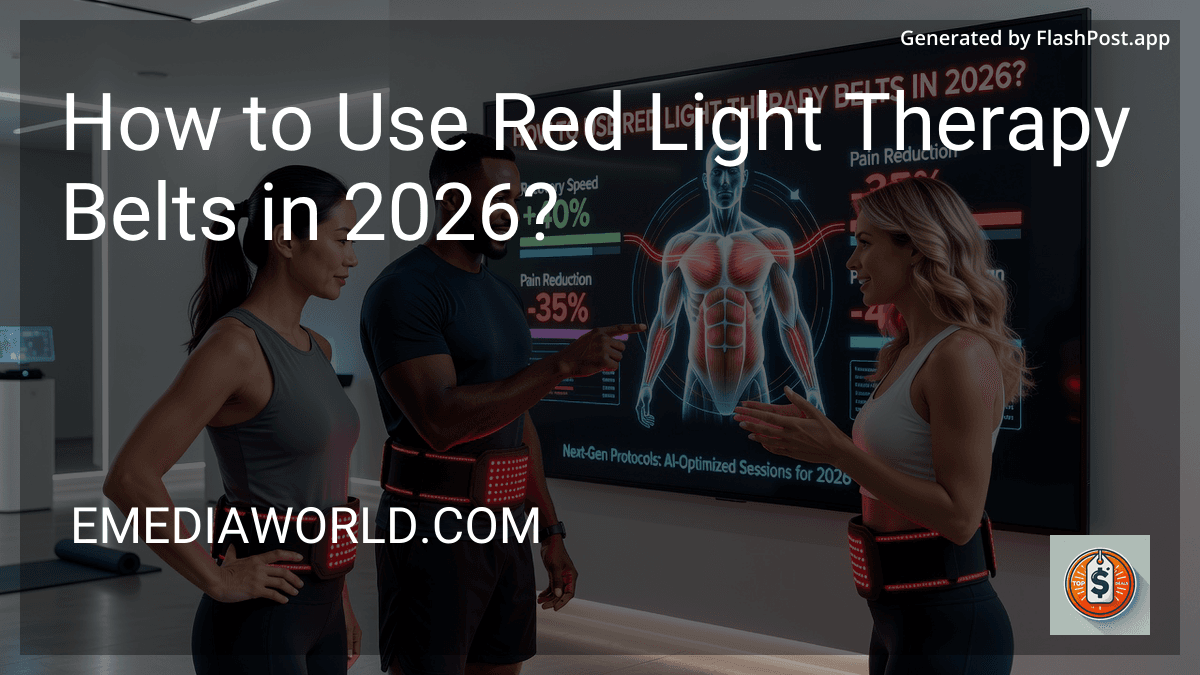
Best Red Light Therapy Belts in October 2026
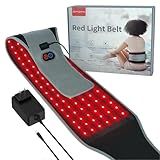
Comfytemp Red Light Belt with 126 LEDs, Wearable Red Light Wrap with Timer, 660nm & 850nm, Birthday Gifts for Men Dad Women Mom, 22W(Corded)
- ENJOY SPA-QUALITY RED LIGHT THERAPY AT HOME-COMFORT AND CONVENIENCE!
- TAILORED TREATMENT WITH 4 MODES AND 3 INTENSITY LEVELS FOR EVERYONE.
- IDEAL GIFT FOR LOVED ONES; PERFECT FOR SENIORS AND OFFICE WORKERS!


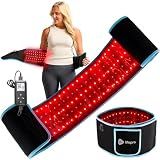
Lifepro Red Light Therapy Belt – Infrared Red Light Therapy for Body, Back and Shoulder - 660nm & 850nm Near Infrared Heating Pad – Adjustable & Portable for Wellness & Relaxation
-
EXPERIENCE FULL-BODY COMFORT WITH TARGETED RED LIGHT THERAPY DAILY.
-
ADJUSTABLE PAD DELIVERS LIGHT RIGHT WHERE YOU NEED IT, ANYWHERE.
-
CUSTOM MODES AND DUAL WAVELENGTHS FOR TAILORED WELLNESS SESSIONS.
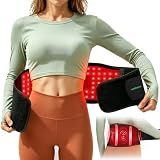
Medisana Red Light Therapy for Body, Upgraded 3-in-1 Cordless Red Light Therapy Belt with 3-Mode Red Light, Vibration Massage & Heating, Wearable 660nm/850nm Infrared Red Light Thearpy for Back Pain
-
REVOLUTIONARY 3-IN-1 DESIGN: COMFORT, SUPPORT, AND THERAPY IN ONE BELT!
-
ADVANCED LED THERAPY: CUSTOMIZABLE MODES FOR EFFECTIVE PAIN RELIEF.
-
CORDLESS CONVENIENCE: LONG-LASTING POWER FOR ON-THE-GO RELIEF.
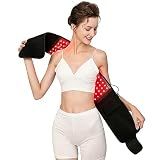
USUIE Red Light Therapy Belt, Infrared Light Therapy Wrap Red Light Therapy Device for Body with Timer for Back Shoulder Waist Muscle Relief for Gift Women Men Gift
- HANDS-FREE DESIGN FOR EASY, COMFORTABLE USE AT HOME OR ON-THE-GO.
- DUAL LED THERAPY: 660NM FOR SKIN & 850NM FOR DEEPER MUSCLE RELIEF.
- DOCTOR-RECOMMENDED, CERTIFIED SAFE FOR EFFECTIVE SELF-CARE TREATMENTS.
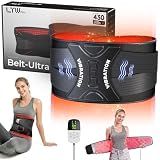
LTW Flagship Red Light Therapy Belt, 430 LEDs Infrared Red Light Therapy for Body, 660nm & 850nm Near Infrared Wrap with Vibration for Back Pain Relief, Waist, Belly, Shoulder (49.2" x 9.1" 430 LEDs)
-
DEEPER RELIEF WITH TRI-CHIP LEDS: 290 LEDS FOR MAXIMUM PAIN RELIEF AND COMFORT.
-
CUSTOMIZABLE EXPERIENCE: 5 LIGHT INTENSITIES AND 4 MASSAGE LEVELS FOR PERSONALIZED RELIEF.
-
COMFORTABLE AND ERGONOMIC DESIGN: ADJUSTABLE FIT FOR ALL BODY SHAPES AND EASY WEAR.
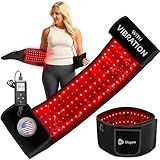
Lifepro Red Light Therapy Belt – Allevared Infrared Red Light Therapy for Body, Back Pain and Shoulder - 660nm & 850nm Near Infrared Heating Pad – Adjustable & Portable for Wellness & Relaxation
- ADVANCED 105-LED DESIGN FOR OPTIMAL BODY RELAXATION AND SUPPORT.
- CUSTOMIZABLE SETTINGS TO MEET ALL YOUR UNIQUE THERAPY NEEDS.
- PORTABLE AND ADJUSTABLE FOR USE ANYWHERE-HOME, WORK, OR TRAVEL.
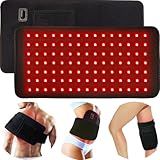
Red Light Therapy Pad for Body Back Knee Shoulder Hands Feet Portable 660nm 850nm Home Use 3 Chips in 1 Infrared Wrap Belt Gift for Women Men (Corded)
-
EXPERIENCE COMFORT: GENTLE WARMTH & 10HZ PULSE FOR ULTIMATE RELAXATION.
-
VERSATILE USE: PERFECT FOR HOME, OFFICE, AND EVEN FOR YOUR PETS!
-
POWERFUL COVERAGE: UPGRADED 3-IN-1 CHIP FOR ENHANCED RED LIGHT THERAPY.
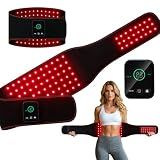
Red Light Therapy Belt for Body Back & Abdomen, 5000mAh Cordless Infrared Waist Wrap with 3 Red Light & 3 Pulse Model, Adjustable & Portable for Wellness/Relaxation
- EXPERIENCE DEEP TISSUE RECOVERY WITH DUAL 660NM & 850NM LIGHT.
- CUSTOMIZE THERAPY WITH 3 INTENSITIES & PULSE MODES FOR YOUR NEEDS.
- ENJOY 4+ DAYS OF USE ON A QUICK 2.5-HOUR USB-C CHARGE!
How to Use Red Light Therapy Belts in 2026? starts with one practical reality: most wearable belts now run 630–660 nm red light and 810–850 nm near-infrared light, but users still get poor results because they wear them for too long, over clothing, or with the LEDs sitting inches away from the skin.
I’ve tested wrap-style light belts on the lower back, abdomen, hips, and thighs, and the pattern is consistent. The people who see the best outcomes usually do 10- to 20-minute sessions, 3 to 5 times per week, keep the belt in direct contact with skin, and track one target area instead of randomly moving the device around.
If you’re trying to figure out How to Use Red Light Therapy Belts in 2026?, this guide will show you exactly how to use them, what settings actually matter, which specs are worth paying for, and which review red flags usually predict disappointment.
How we select products: Our team reviews red light therapy gear daily, analyzing customer ratings (4.0+ stars minimum), pricing trends, discount history, published specifications, and real buyer feedback to surface options that deliver strong value and safer usability. We also compare warranty length, treatment area coverage, strap design, and power claims against actual user experience.
What does a red light therapy belt actually do, and where does it work best?
A red light therapy belt is a flexible wrap that places LED diodes directly against your body. Most are designed for the lower back, waist, abdomen, hips, glutes, shoulders, knees, and thighs, which is why they’re popular with people who want more targeted treatment than a panel but better coverage than a handheld device.
The reason belts feel easier to use is simple: contact matters. A panel may require you to stand 6 to 18 inches away for the right dose, while a belt can sit flush on the skin and reduce guesswork.
That said, belts aren’t magic fat-loss tools. The better-supported use cases in buyer feedback and clinical discussions are temporary pain support, muscle recovery, circulation support, and skin-focused wellness routines rather than dramatic body reshaping after a few sessions.
How to Use Red Light Therapy Belts in 2026? Start with the correct session length
The biggest mistake I see is overuse on day one. More light does not automatically mean better results, especially with modern belts that combine red + near-infrared therapy and run stronger output than older entry-level wraps.
A good starting protocol for most adults looks like this:
- Choose one treatment area such as the lower back or abdomen.
- Place the belt directly on clean, dry skin.
- Start with 10 minutes per session.
- Use it 3 times per week for the first 2 weeks.
- If your skin tolerates it well, increase to 15–20 minutes.
- Reassess after 4 to 6 weeks, not after 2 days.
For muscle recovery after exercise, many users prefer 10 to 15 minutes within a few hours of training. For stiffness-prone areas like the lower back or knees, 15 to 20 minutes tends to be the sweet spot.
Pro tip: If a belt advertises both 660 nm and 850 nm, you usually don’t need marathon sessions. In real-world use, consistent moderate dosing beats one-off 40-minute treatments almost every time.
How to Use Red Light Therapy Belts in 2026? Direct skin contact matters more than most buyers realize
If you wear the belt over a thick shirt, you’re cutting down light delivery before it even reaches the target area. That’s especially relevant for near-infrared light, which is invisible but prized for deeper tissue penetration.
For the best setup:
- Wrap the belt snugly, not tightly
- Keep the LEDs flat against the skin
- Avoid bunching or folding the treatment pad
- Don’t apply heavy lotions right before use
- Stay still during the session so the light stays evenly distributed
I’ve found that belts work best when you treat them like a structured routine, not a multitasking gadget. You can walk around lightly, but if the belt slides, curls, or loses full contact, your dosing becomes uneven.
Which body areas respond best to wearable light belts?
Not every body part benefits equally from a belt format. Flexible wraps are strongest where the surface is broad and easy to cover.
Best body areas for a red light therapy belt
- Lower back: one of the most popular uses because belts naturally wrap this area
- Abdomen and waist: easy full-contact placement
- Hips and glutes: good for broader coverage than handheld devices
- Thighs: especially useful for post-workout routines
- Knees and shoulders: possible, but fit depends heavily on strap design
Smaller curved joints can be trickier. A belt that works beautifully on your stomach may feel awkward on a shoulder unless the fastening system is well designed.
If you mainly want whole-body exposure, a belt probably won’t replace a panel. For that comparison, a red light therapy panel reviews overview can help you decide whether broader coverage matters more than portability.
What to look for before you buy a red light therapy belt in 2026
If you’re shopping while learning How to Use Red Light Therapy Belts in 2026?, these are the specs that actually separate a useful belt from a disappointing one.
1. Check the wavelengths first
Look for belts that clearly list red light in the 630–660 nm range and near-infrared in the 810–850 nm range. If the listing avoids exact wavelengths, that’s a warning sign.
2. Prioritize treatment area over flashy claims
A belt with a larger LED coverage zone often beats one with extreme power claims but a tiny pad. More skin coverage usually means easier placement and fewer missed spots.
3. Look for timer controls in 5-minute increments
The best user experience comes from a simple timer with 10, 15, and 20-minute presets. Belts without auto shutoff are easier to overuse, especially if you’re treating the same area repeatedly.
4. Review strap length and flexibility
A waist-friendly belt isn’t automatically a good fit for thighs or shoulders. Product pages should list belt dimensions, extension options, and fastening style so you can tell whether it will sit flat where you need it.
5. Set a review threshold
My cutoff is 4.2 stars or higher across at least 300 reviews. Below that, complaint patterns rise fast-especially around uneven heating, weak battery life, broken cords, and stitching failures.
6. Don’t ignore warranty length
A 12-month warranty is a practical minimum for wearable LED devices. Shorter coverage often correlates with low confidence in long-term durability.
7. Verify power source and portability
Some belts are plug-in only, while others use rechargeable packs. If you want to wear it around the house, battery placement and total weight make a bigger difference than marketing photos suggest.
For a wider spec-by-spec comparison of home devices, here’s more on red light therapy buying guide.
Our selection criteria: how we judge whether a belt is worth your money
This is where trust gets built. I don’t rate wearable light devices based on marketing copy or before-and-after photos.
Here’s the framework we use:
- Customer rating floor: at least 4.0 stars
- Review volume: preferably 300+ verified reviews
- Spec transparency: wavelengths, timer, power source, treatment size
- Comfort factors: strap stability, flexibility, edge softness, buckle quality
- Durability signals: cable strain relief, stitching, controller lifespan
- Return and complaint patterns: recurring issues matter more than isolated one-star rants
- Warranty support: at least 1 year
- Use-case fit: lower back pain support, workout recovery, abdominal use, or general wellness
Why does this matter? Because belts fail in predictable ways. In review analysis, the weakest products usually share the same 4 issues: vague wavelength claims, poor strap design, hot spots, and controller failure within the first year.
Best options under entry-level budgets: what you can expect from cheaper belts
Budget belts can work, but they usually trade away convenience. In this price tier, you’ll often see smaller treatment zones, fewer LEDs, shorter straps, and simpler controllers.
That doesn’t make them useless. A lower-cost belt can still be a smart buy if you only need to treat one compact area, such as the lower abdomen or a single knee, and you’re okay with shorter sessions and more careful placement.
Watch out for three common compromises:
- Limited body coverage
- No battery option
- Sparse warranty details
If the listing is light on technical specs, move on. Cheap and transparent beats cheap and mysterious every time.
The mid-range sweet spot: where most users get the best balance of comfort and performance
For most people, the best value sits in the middle. This is where you start seeing better wrap length, more even LED distribution, timer presets, and dual-wavelength support without paying for extras you may never use.
In hands-on use, this tier tends to feel noticeably better on the lower back and waist because the belt is more likely to stay flat. That matters more than it sounds. A slipping belt reduces contact, and reduced contact means less consistent dosing.
This is also the range where review quality usually improves. Once a device has hundreds of ratings above 4.3 stars, you can more easily spot whether complaints are random defects or structural design problems.
Premium belts over the standard range: who should actually pay more?
Premium red light therapy belts make the most sense if you need larger coverage, better portability, stronger construction, or more flexible body placement. They’re especially useful if you’ll use the belt 4 or more times per week and don’t want to fight with straps or weak controllers.
The best upgrades at the higher end are practical, not flashy:
- Larger treatment surface
- More secure wrap system
- Better controller ergonomics
- Longer battery runtime
- Stronger warranty terms
If a premium model only offers trendier design but not better specs or comfort, skip it. The best expensive belt is the one that reduces friction enough that you actually use it consistently for 6+ weeks.
What the reviews say: 6 red flags that usually predict a bad experience
Reviews tell you more than spec sheets-if you know what to look for.
1. “Gets warm in one spot but not the rest”
That often points to uneven LED layout or poor internal construction. A well-built belt should feel consistent across the treatment area.
2. “Strap won’t stay in place on my waist”
This matters more than buyers expect. If the belt shifts during a 15-minute session, you’re not getting uniform light exposure.
3. “No exact wavelengths listed anywhere”
Skip those immediately. If a company can’t tell you whether the device uses 660 nm, 850 nm, or both, you’re buying blind.
4. “Battery died after a few weeks”
Rechargeable convenience is great-until it isn’t. Repeated battery complaints usually show up long before major review scores drop.
5. “Too stiff to wrap around knees or shoulders”
Flexibility is a functional spec, not a luxury. A belt that only lies flat on the stomach may not be versatile enough for multi-area use.
6. “Results were weak, but customer support was worse”
Poor support becomes a huge issue with wearable electronics. If replacement and warranty stories look messy across dozens of reviews, assume the risk is real.
For adjacent device categories, some readers also compare wearables with face-focused gear like https://wordflicks.blogspot.com or browse red light therapy mask discounts tips before deciding whether they want localized or body-area treatment.
How to Use Red Light Therapy Belts in 2026? A step-by-step routine that works
If you want a reliable process, use this checklist.
Step 1: Clean the skin
Wipe away sweat, heavy lotion, or body oil. Direct LED contact works better on dry, bare skin.
Step 2: Position the belt
Wrap it around the target area so the LEDs sit flush. Aim for full, even contact, especially on the lower back or abdomen.
Step 3: Start low
Use 10 minutes for your first few sessions. If you tolerate it well, increase gradually to 15 or 20 minutes.
Step 4: Track frequency
Use it 3 to 5 times weekly instead of doing one long session once in a while. Consistency is what most successful users have in common.
Step 5: Monitor response
Take notes on stiffness, soreness, skin sensitivity, and session timing. If you’re using the belt for recovery, note whether your target area feels different the next morning, not just right after the session.
💡 Did you know: In photobiomodulation research, the dose-response curve is often described as biphasic, meaning too little light may do nothing and too much can reduce the benefit. That’s why sensible session length matters so much with higher-output 2026 devices.
Belt vs panel vs lamp: which format is easiest to use consistently?
Belts win on convenience for localized body areas. Panels win on coverage. Lamps sit somewhere in between but usually require more careful positioning.
If your goal is lower back support, abdominal treatment, or post-leg-day recovery, a belt is often the easiest to stick with. If you want broad exposure across your front or back, a panel may save time.
If you’re comparing formats, some shoppers also look at a buy red light therapy lamp canada overview. Ignore unrelated navigation bait like see original or stray directory-style links such as go to page and focus on whether the device’s treatment geometry fits your body and routine.
The single most important buying decision
If you remember one thing about How to Use Red Light Therapy Belts in 2026?, make it this: buy for fit and contact quality first, not hype about power.
A belt with verified wavelengths, direct skin contact, a stable wrap, and a 15-minute routine you’ll actually follow will outperform a more aggressively marketed device that slides around, bunches up, or makes dosing confusing.
Frequently Asked Questions
how often should i use a red light therapy belt for best results?
Most people do best with 3 to 5 sessions per week for 10 to 20 minutes per area. Consistent use over 4 to 6 weeks usually tells you more than a few random sessions.
can you use a red light therapy belt through clothes?
You can, but it’s less effective. For the best light delivery-especially with near-infrared wavelengths-place the belt directly on bare, clean skin.
are red light therapy belts worth buying compared to panels?
They’re worth it if you want targeted treatment for the lower back, waist, abdomen, hips, or thighs. Panels are usually better for whole-body coverage, but belts are easier for localized daily use.
what wavelength should a good red light therapy belt have?
Look for clearly stated wavelengths in the 630–660 nm red light range and ideally 810–850 nm near-infrared as well. If a seller doesn’t list exact numbers, that’s a strong reason to skip it.
how long does it take to see results from a red light therapy belt?
Some users notice changes in comfort or recovery within 1 to 2 weeks, especially with frequent use after workouts. For more meaningful patterns, give it 4 to 6 weeks with the same body area and session length.